Hearing that you have a pancreatic cyst can sound scary. I understand that. As a gastroenterologist, I talk with patients about this every week. The good news is that most pancreatic cysts are not cancer.
A pancreatic cyst is a small fluid-filled sac in the pancreas. The pancreas is an organ behind the stomach that helps with digestion and blood sugar control.
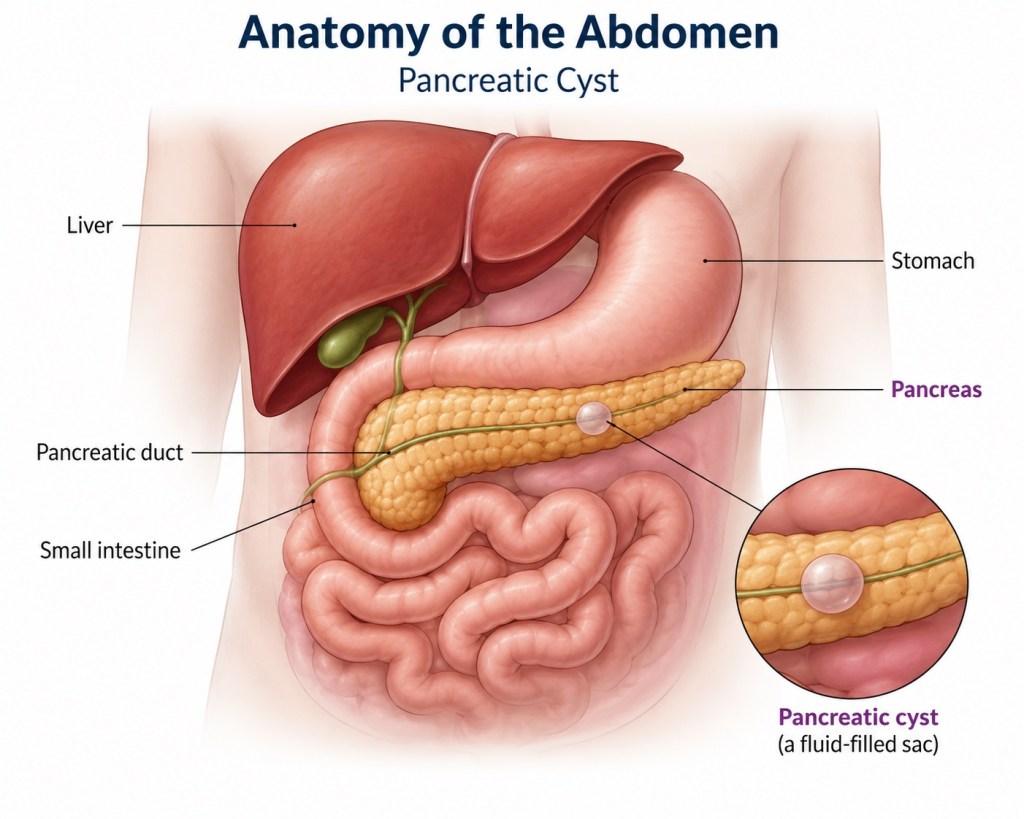
Many pancreatic cysts are found by accident during a CT scan or MRI done for another reason. Most people do not feel any symptoms at all.
There are different types of pancreatic cysts. Some are harmless and never cause problems. Others may slowly change over time and need closer follow-up. A small number can turn into cancer if left untreated.
That is why careful monitoring matters.
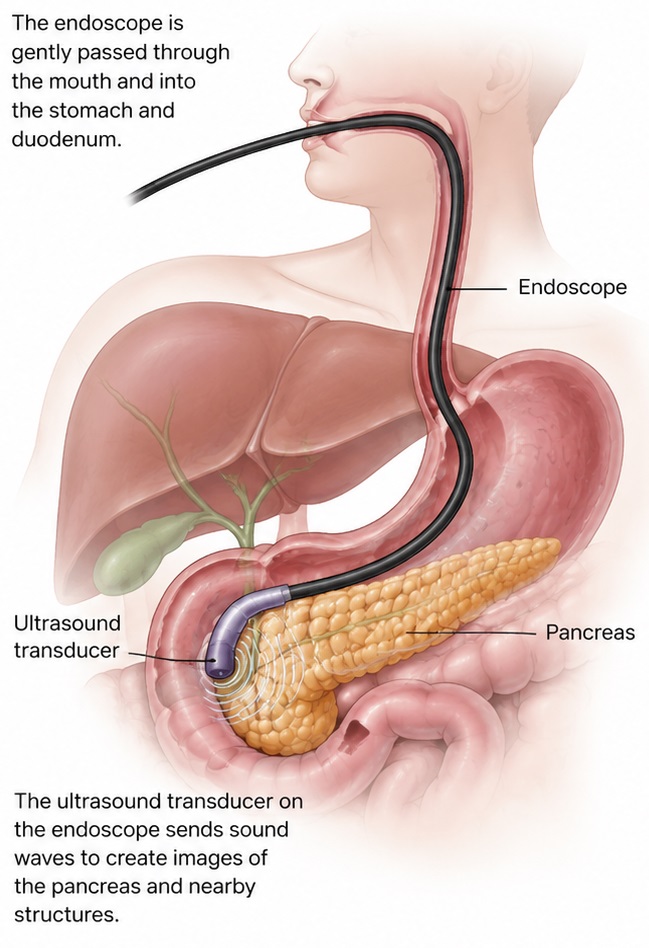
Your doctor may recommend an MRI, endoscopic ultrasound, or both. An endoscopic ultrasound uses a thin camera passed through the mouth into the stomach to get close pictures of the pancreas. Sometimes we also take a fluid sample from the cyst to learn more about it.
Many patients ask me, “Do I need surgery?”
Usually, the answer is no.
Most pancreatic cysts can simply be watched over time with repeat imaging. Surgery is only recommended if the cyst has high-risk features. These may include:
- Large size
- Growth over time
- Solid areas inside the cyst
- Changes in the pancreatic duct
- Symptoms such as jaundice or repeated pancreatitis
The goal is to catch dangerous changes early while avoiding unnecessary surgery.
It is normal to feel anxious while waiting for tests or follow-up scans. Try to remember that pancreatic cysts are common, especially as people get older. Most never become cancer.
The best thing you can do is stay engaged with your care. Keep follow-up appointments, ask questions, and make sure you understand the plan.
If you have been told you have a pancreatic cyst, you are not alone. With the right monitoring, we can usually manage these cysts safely and effectively.

